Ficus benjamina L.
Common Name
Benjamin Fig, Weeping fig
Family
Moraceae
Origin & Distribution
Native to Southeast Asia and northern Australia. Widely cultivated across tropical and subtropical regions, including Nigeria, as an ornamental and shade tree.
Conservation Status
Least Concern

Description
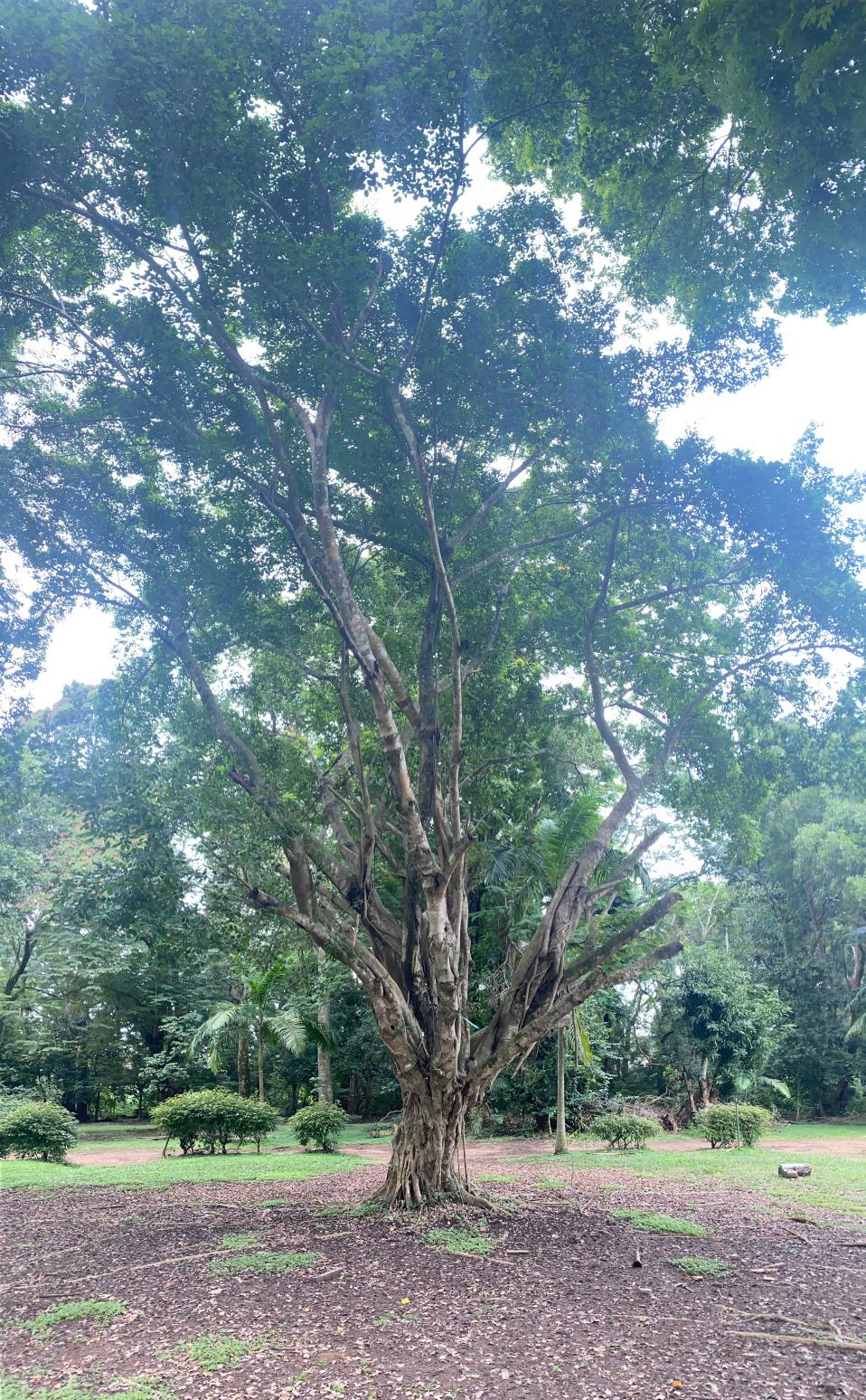
Evergreen tree, typically 10–20 m tall in open landscapes but can reach up to 30 m in natural forest settings. Trunk often light gray and smooth, with aerial roots developing in mature specimens. Leaves simple, alternate, and glossy green; ovate to elliptic with acuminate tips, 6–13 cm long. Branches drooping gracefully, giving the characteristic "weeping" form. Fruits are small figs (syconia), 1–2 cm in diameter, turning from green to reddish or purple when ripe.
Ecological Information
Prefers full sun to partial shade and well-drained loamy soils. Tolerates occasional drought but thrives in moist, humid conditions. Adaptable to Nigeria's tropical climate; retains leaves year-round. Often forms a dense canopy that suppresses undergrowth.
Uses & Importance
Popular as an ornamental tree for landscaping, gardens, and parks. Used as an indoor potted plant in smaller forms. Provides dense shade, making it useful in public spaces. Fruits are eaten by birds and some mammals, aiding seed dispersal. Wood used occasionally for low-grade timber or firewood.
Tree Photos

Quick Info
- Scientific Name
- Ficus benjamina L.
- Family
- Moraceae
- Tree Code
- UI-BG-TS-012
- Conservation
- Least Concern