Antiaris africana Engl.
Common Name
African Antiaris, Bark cloth Tree
Family
Moraceae
Origin & Distribution
Native to tropical Africa, occurring from Senegal and Guinea eastwards to Ethiopia, Uganda, and Tanzania, and southwards to Angola and Mozambique. In Nigeria, common in lowland rainforests and moist semi-deciduous forests. Cultivated in botanical collections, including the University of Ibadan Botanical Garden.
Conservation Status
Least Concern

Description
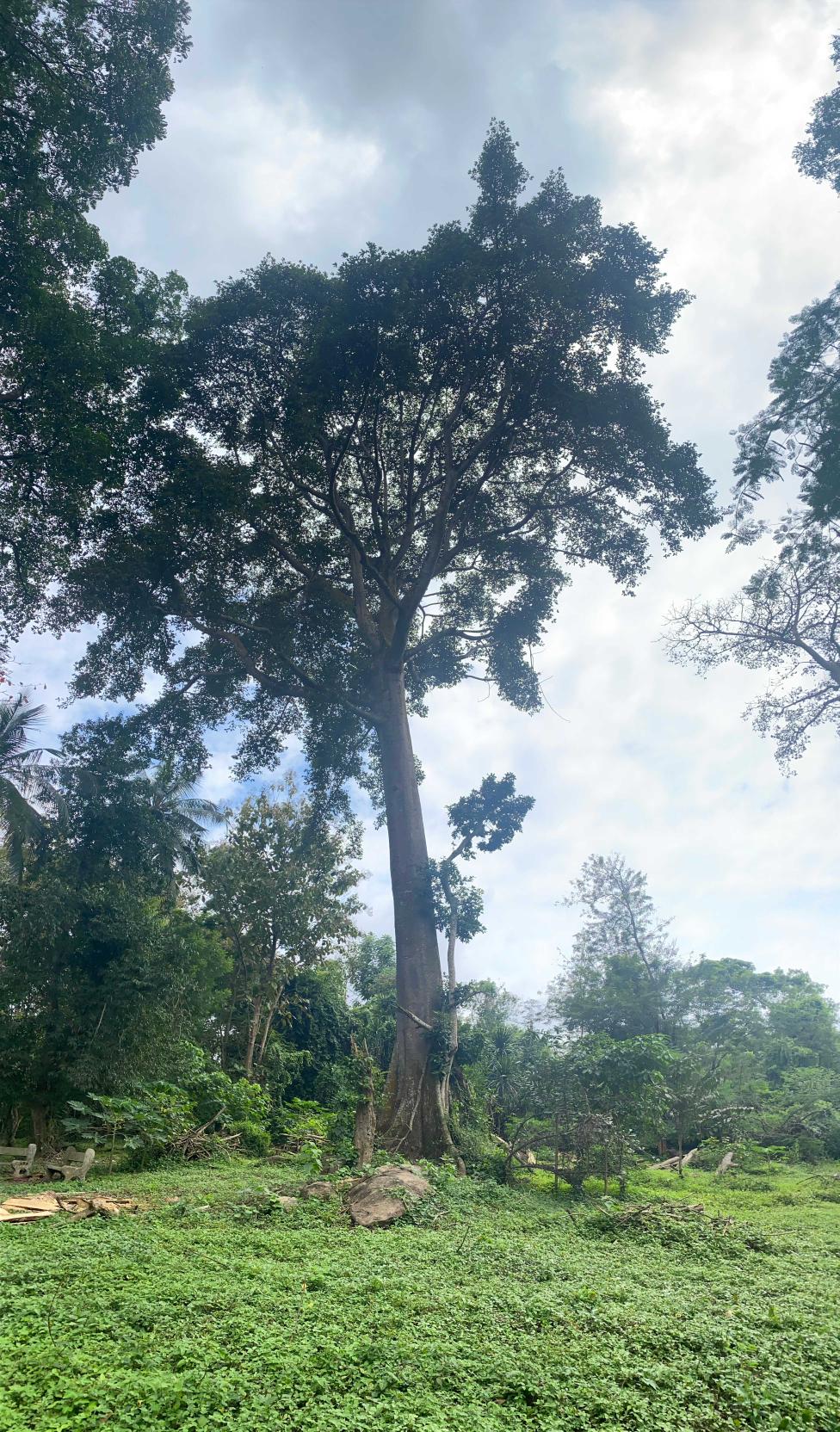
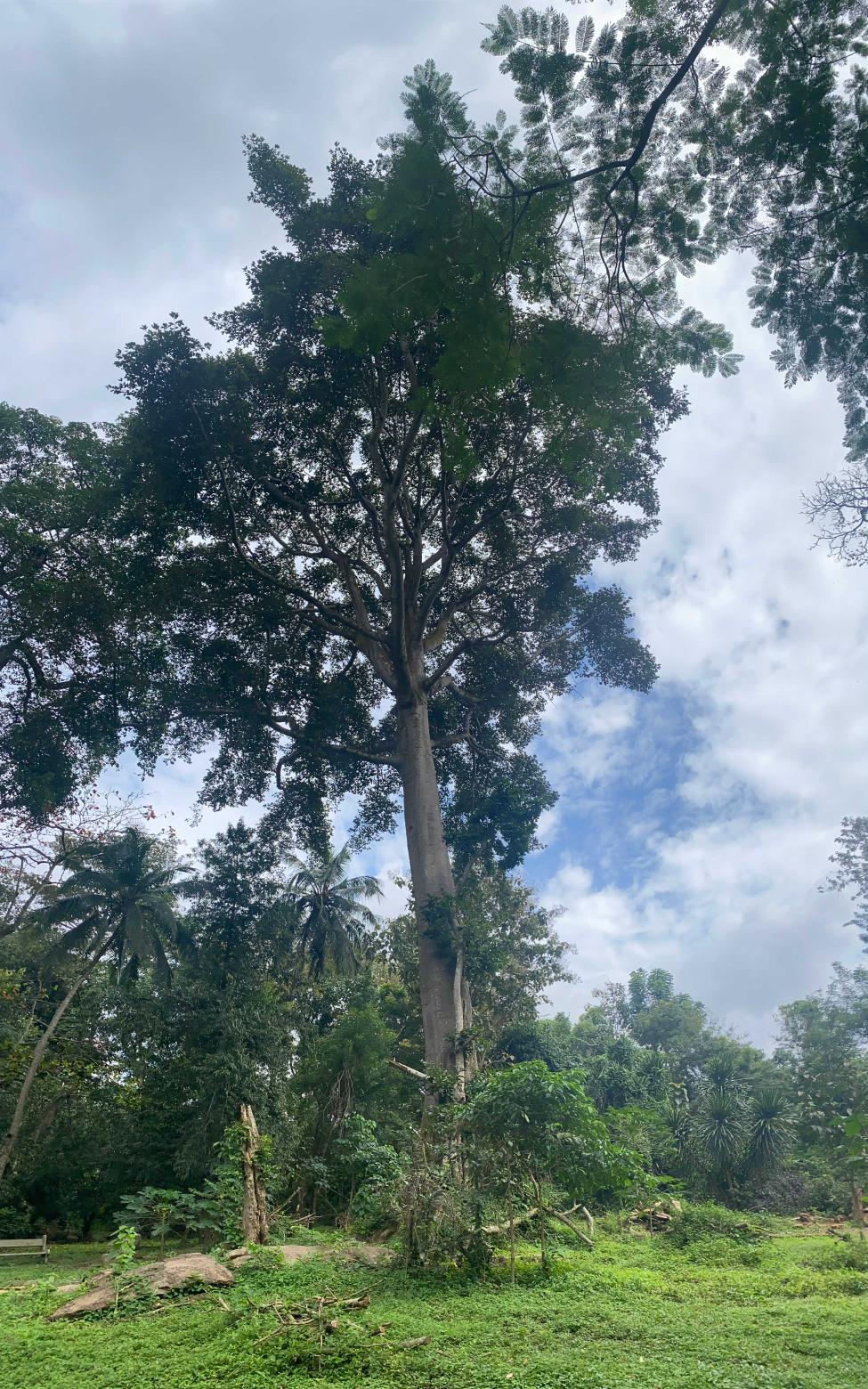
Large, deciduous to semi-deciduous tree, often reaching 30–45 m in height in the wild; smaller in cultivated settings (15–25 m). Trunk usually straight and cylindrical with buttresses at the base in mature specimens. Bark gray to pale brown, smooth in young trees but scaly with age; inner bark fibrous. Leaves simple, alternate, broadly ovate with asymmetrical bases, 6–18 cm long, rough on the upper surface, and softer beneath. Flowers are small, unisexual; male flowers in clusters, female flowers solitary. Fruits are small figs (syconia), yellow to orange when ripe, about 1–1.5 cm in diameter.
Ecological Information
Thrives in moist, fertile, well-drained soils. Prefers full sunlight in open areas but can tolerate partial shade. Deciduous in dry season, shedding leaves to conserve water. Common in secondary forests and riverine areas.
Uses & Importance
Bark used traditionally for making bark cloth (stripped, beaten, and softened). Timber valued for furniture, plywood, and general construction; lightweight but durable. Leaves and fruits serve as fodder for livestock and food for wildlife. Bark and roots used in traditional medicine for treating various ailments.
Tree Photos
Quick Info
- Scientific Name
- Antiaris africana Engl.
- Family
- Moraceae
- Tree Code
- UI-BG-TS-013
- Conservation
- Least Concern