Cordia millenii Baker
Common Name
West African Hardwood
Family
Boraginaceae
Origin & Distribution
Native to tropical West and Central Africa, widely distributed from Senegal and Guinea through Nigeria, Cameroon, Gabon, and the Democratic Republic of Congo. In Nigeria, it occurs in lowland rainforests, moist semi-deciduous forests, and forest-savanna mosaics. Present in cultivated collections such as the University of Ibadan Botanical Garden.
Conservation Status
Least Concern

Description
Medium to large deciduous tree, typically reaching 18–25 m in height; some individuals in optimal forest conditions exceed 30 m. Trunk straight and cylindrical with little or no buttressing; diameter often 60–100 cm in mature trees. Bark pale gray to brown, slightly rough and flaky, exuding a light gum when cut. Leaves simple, alternate, broadly ovate to elliptical, 10–25 cm long, with a slightly rough texture and prominent veins. Flowers are small, tubular, white to cream, in loose clusters; mildly fragrant. Fruits are globose to ovoid drupes, yellow-orange when ripe, 2–3 cm in diameter, with a sweet, edible pulp.
Ecological Information
Prefers deep, fertile, well-drained loamy soils. Thrives in areas with high rainfall but can tolerate short dry spells. Deciduous in the dry season. Commonly regenerates naturally in disturbed forest areas and farm fallows.
Uses & Importance
Wood highly valued for furniture, cabinetry, plywood, and interior joinery due to its fine grain and workability. Fruit is edible and sometimes sold in local markets; sweet pulp eaten fresh. Leaves used in traditional medicine for wound healing and fever treatment. Bark decoctions used locally for coughs and chest ailments. Also planted as a shade tree in homesteads and compounds.
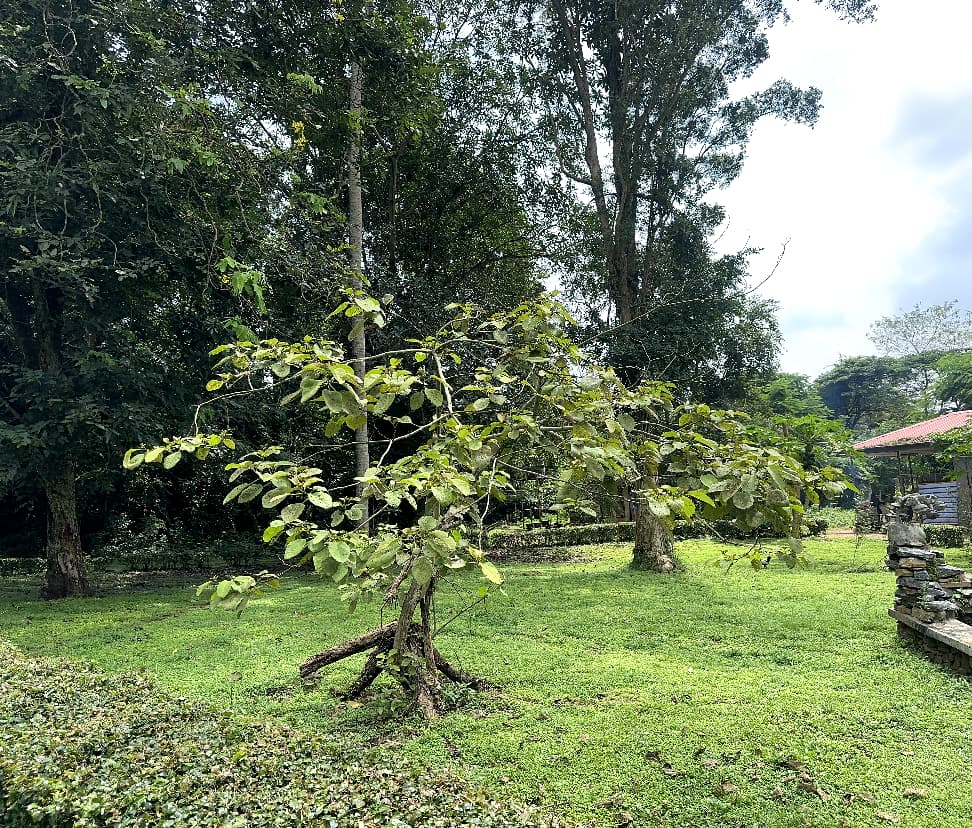
Tree Photos
Quick Info
- Scientific Name
- Cordia millenii Baker
- Family
- Boraginaceae
- Tree Code
- UI-BG-TS-015
- Conservation
- Least Concern