Adenanthera pavonina L.
Common Name
Red Sandalwood, Coral Wood
Family
Caesalpinioideae
Origin & Distribution
Native to Southeast Asia and the Indian subcontinent. Widely cultivated in tropical and subtropical regions worldwide, including West Africa, the Caribbean, and South America. In Nigeria, often planted as an ornamental, shade tree, and avenue tree in parks, gardens, and institutional grounds, including the University of Ibadan Botanical Garden.
Conservation Status
Least Concern

Description
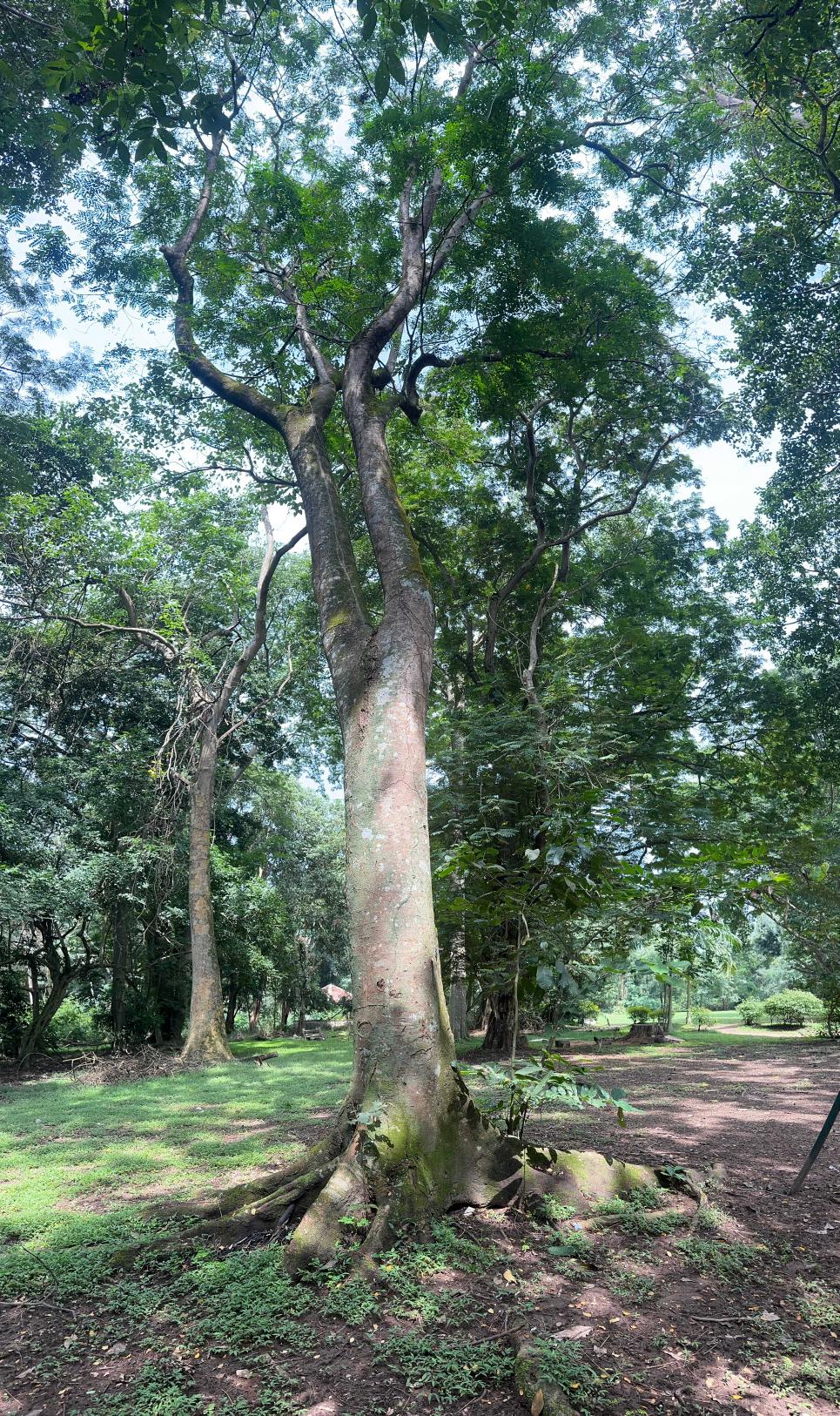
Medium-sized deciduous tree, typically 6�15 m tall, occasionally reaching 20 m under favorable conditions. Trunk generally straight, with light gray-brown bark that becomes slightly fissured with age. Leaves bipinnate, alternate, each 20�40 cm long; leaflets small, opposite, ovate to oblong, glossy green. Flowers are small, yellowish, in dense drooping spikes, mildly fragrant, appearing seasonally. Fruits are twisted, flattened pods, 15�22 cm long, brown when mature, containing 8�12 brilliant red, hard, lens-shaped seeds.
Ecological Information
Prefers well-drained soils and full sunlight. Tolerates a range of soil types including sandy and clay soils. Drought-tolerant once established. Flowers attract bees and other pollinators. Seeds dispersed by birds and small mammals.
Uses & Importance
Seeds are highly ornamental, traditionally used as beads in jewelry, rosaries, and decorative crafts. Wood is hard, fine-grained, and durable, suitable for furniture, tool handles, and small woodcrafts. Leaves and bark used in folk medicine for inflammation and rheumatism. Seeds (after thorough processing) have been used as famine food in some cultures. Planted for shade and as an avenue tree due to attractive form.
Tree Photos

Quick Info
- Scientific Name
- Adenanthera pavonina L.
- Family
- Caesalpinioideae
- Tree Code
- UI-BG-TS-016
- Conservation
- Least Concern