Pentaclethra macrophylla
Common Name
African Oil Bean Tree
Family
Caesalpinioideae
Origin & Distribution
Native to tropical West and Central Africa. Widely distributed from Senegal to Angola, especially in Nigeria, Cameroon, Ghana, and Gabon.
Conservation Status
Least Concern

Description
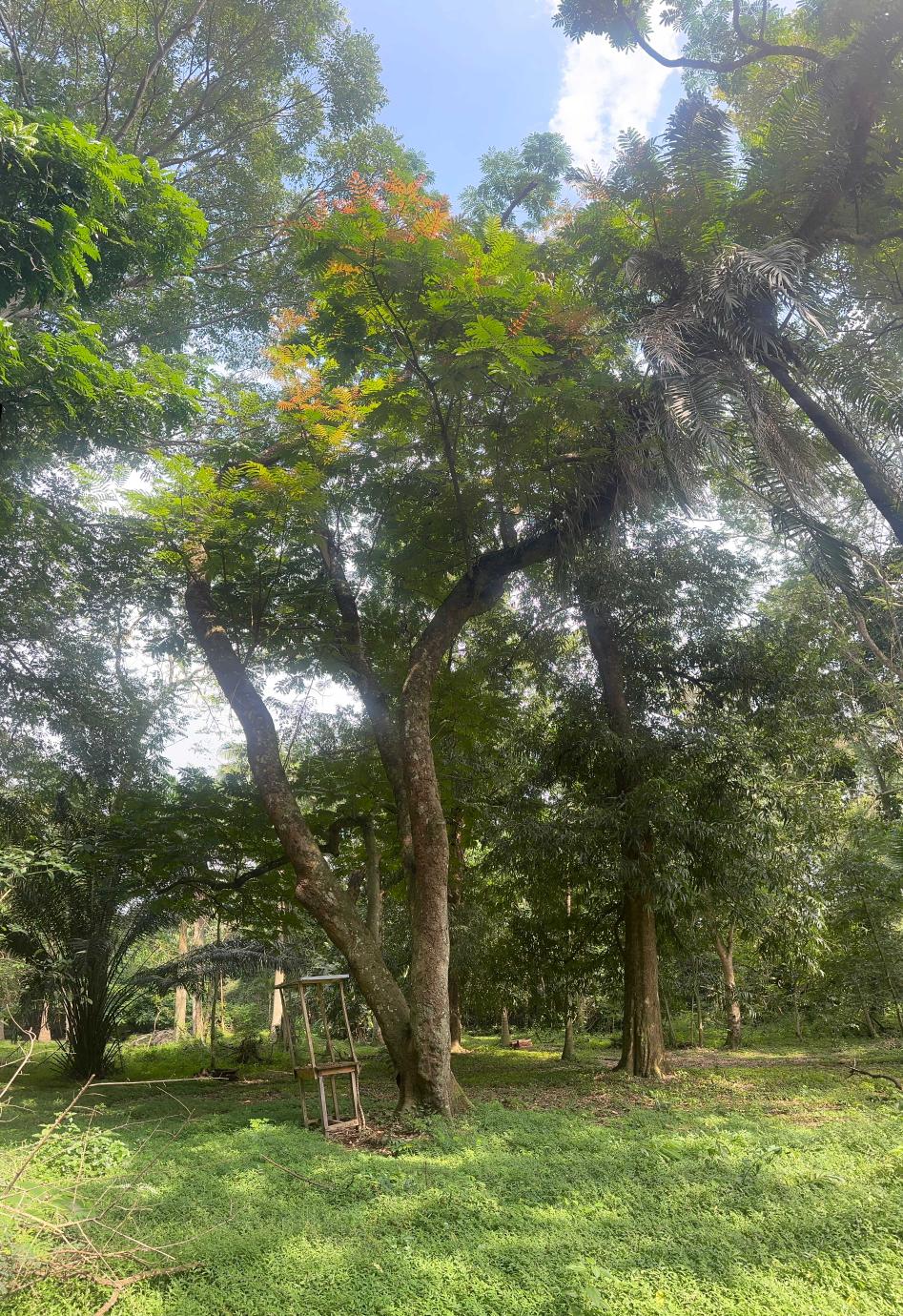
Large, evergreen tree reaching 20–25 m in height. Bole straight, cylindrical, sometimes slightly buttressed at base; can reach 1 m diameter. Bark dark grey-brown, smooth when young, becoming scaly with age. Leaves bipinnate, large, with 8–14 pairs of pinnae; numerous small oblong leaflets, glossy green. Flowers creamy-white, fragrant, in dense cylindrical spikes. Fruit is a large, woody, flat pod (up to 50 cm long), brown when mature, containing 6–10 large flat seeds embedded in whitish pulp.
Ecological Information
Found in lowland rainforest, forest edges, and secondary growth. Prefers deep, well-drained loamy soils; thrives in humid tropical climates. Plays an important role in soil fertility through nitrogen fixation.
Uses & Importance
Seeds processed into the popular fermented food "ugba" in southeastern Nigeria. Seeds yield non-drying oil used in soap making and for cooking. Wood used locally for light construction, though not very durable. Bark, leaves, and seeds have traditional medicinal applications (skin diseases, worms, tonic). Provides shade and acts as a windbreak in farms and homesteads.
Tree Photos

Quick Info
- Scientific Name
- Pentaclethra macrophylla
- Family
- Caesalpinioideae
- Tree Code
- UI-BG-TS-018
- Conservation
- Least Concern