Roystonea regia (Kunth) O.F.Cook
Common Name
Royal Palm
Family
Arecaceae
Origin & Distribution
Native to southern Florida, the Caribbean (especially Cuba), and parts of Central America. Widely cultivated in tropical and subtropical regions worldwide as an ornamental palm, including Nigeria.
Conservation Status
Least Concern

Description
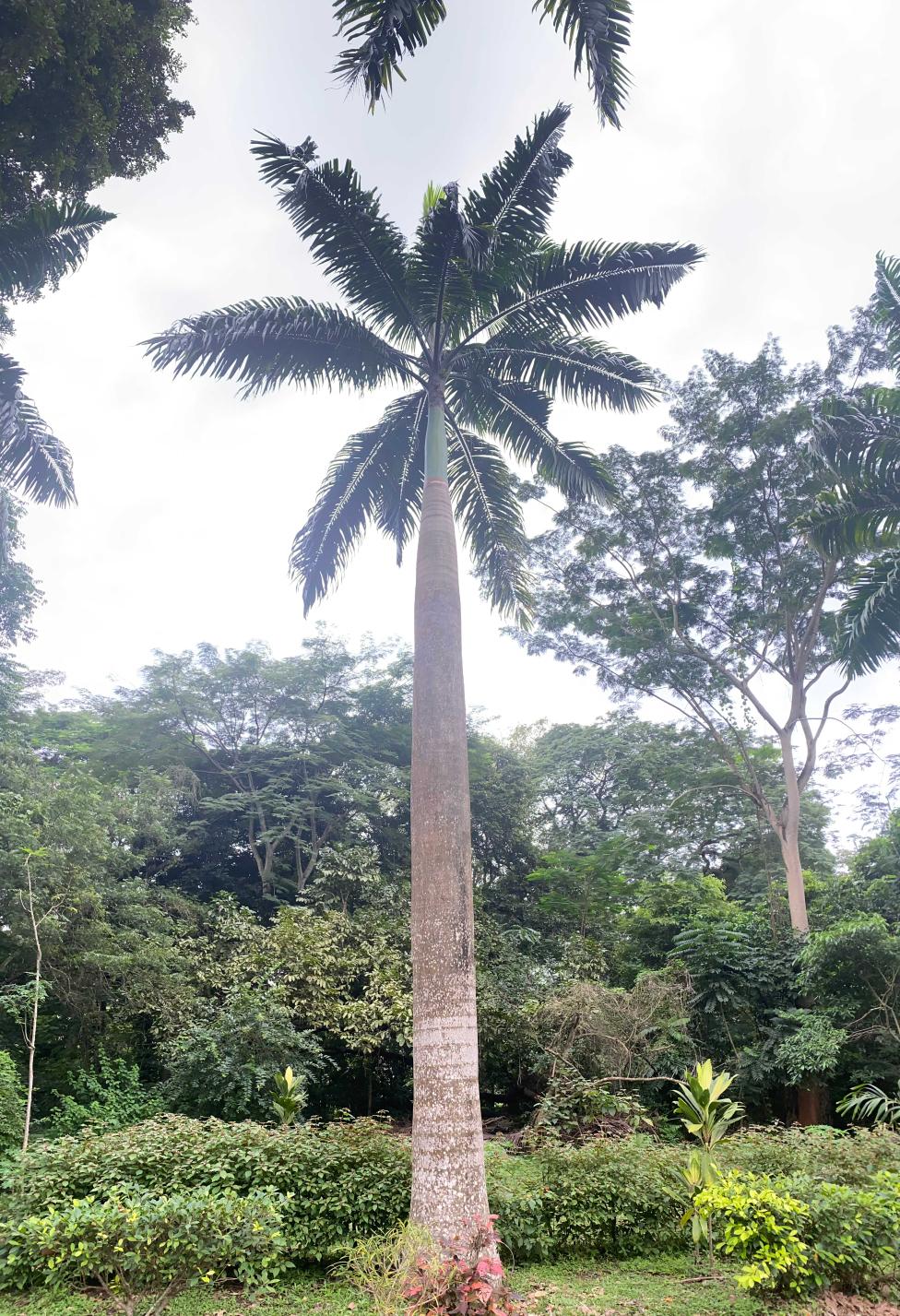
Tall, solitary palm reaching 20–30 meters in height. Smooth, light gray to whitish trunk, swollen at the base and tapering upward. A distinct green crownshaft (smooth, waxy stem section below the leaves) tops the trunk. Crown consists of 15–20 long, pinnate fronds, each up to 4–6 meters long. Inflorescences emerge below the crownshaft, bearing small, creamy-white flowers. Fruits are oval, purplish-black when mature, about 1–2 cm in diameter.
Ecological Information
Prefers full sunlight and well-drained soils; tolerates a range of soil types from sandy to loamy. Thrives in humid tropical climates but is also drought-tolerant once established. Flowering can occur year-round in Nigeria, but peak fruiting is often during the dry season. Provides perching and feeding sites for birds and bats.
Uses & Importance
Highly valued as an ornamental tree for landscaping in gardens, avenues, and institutional grounds. Trunk sometimes used in rural areas for construction. Fruits are eaten by birds and sometimes livestock. Cultural symbol in Cuba and parts of the Caribbean.
Tree Photos

Quick Info
- Scientific Name
- Roystonea regia (Kunth) O.F.Cook
- Family
- Arecaceae
- Tree Code
- UI-BG-TS-003
- Conservation
- Least Concern