Mansonia altissima (A.Chev.)
Common Name
African Black Walnut, Mansonia
Family
Malvaceae
Origin & Distribution
Native to tropical West Africa. Found in Nigeria, Ghana, Côte d'Ivoire, Cameroon, and parts of Central Africa.
Conservation Status
Vulnerable

Description
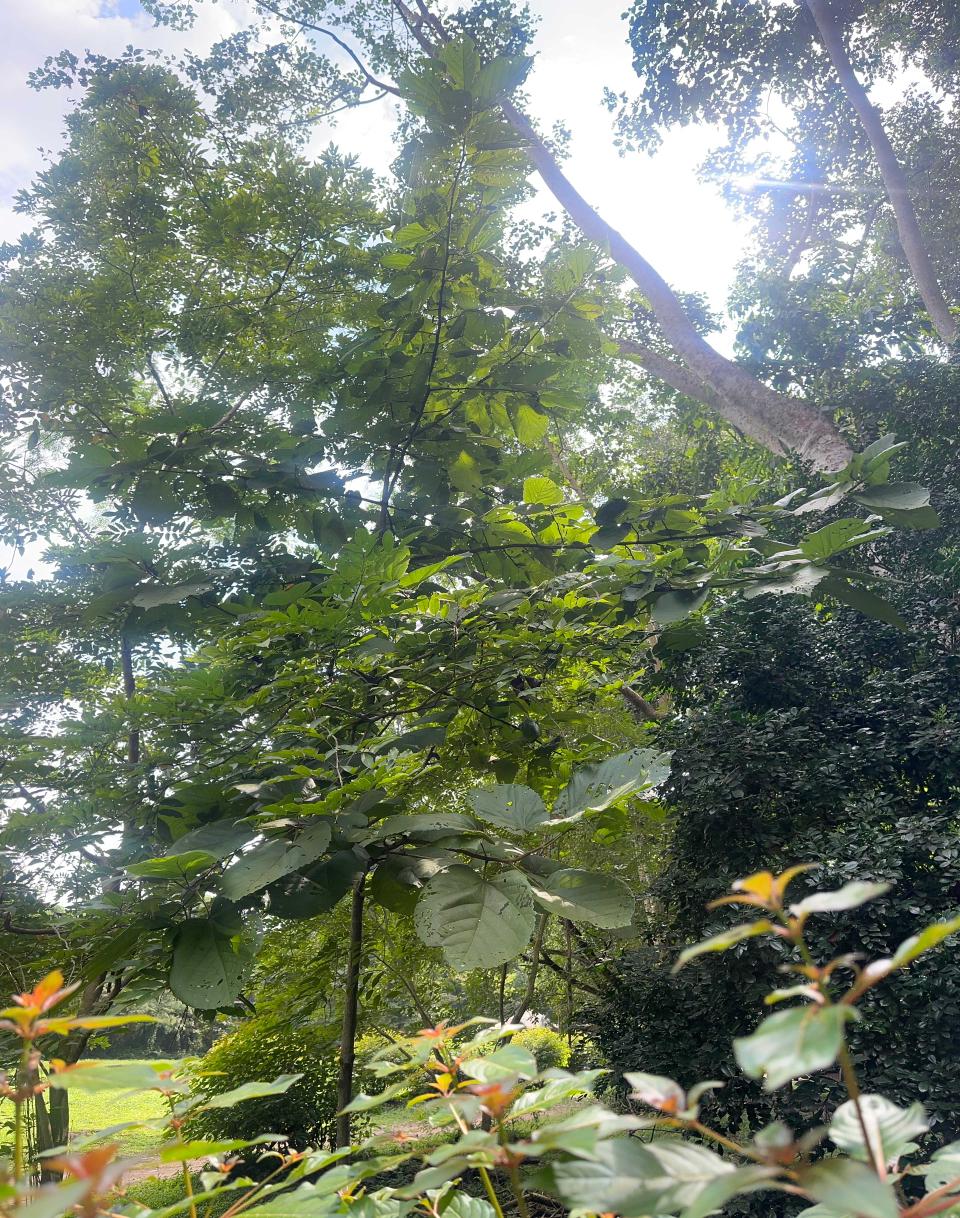
Large deciduous tree reaching 30–40 m in height, with a straight, cylindrical bole up to 2 m in diameter, often clear for 15–25 m. Bark grey to pale brown, slightly scaly; inner bark fibrous and yellowish-brown. Leaves alternate, simple, large, broadly ovate, leathery, with toothed margins and prominent veins. Flowers small, purplish to lilac, in loose terminal or axillary panicles. Fruits are flat, woody, disc-shaped samaras with a wing, aiding wind dispersal.
Ecological Information
Found in moist semi-deciduous forests and riparian zones. Prefers deep, fertile, well-drained soils. Important in forest canopy structure and provides shade for understorey plants.
Uses & Importance
Timber: Hard, durable, termite-resistant; used for furniture, flooring, joinery, and veneer. Bark: Contains tannins; used in local dyeing and medicinal preparations. Leaves sometimes used as mulch in agroforestry.
Tree Photos
Quick Info
- Scientific Name
- Mansonia altissima (A.Chev.)
- Family
- Malvaceae
- Tree Code
- UI-BG-TS-020
- Conservation
- Vulnerable