Dalbergia latifolia Roxb.
Common Name
Indian Rosewood
Family
Faboideae
Origin & Distribution
Native to the Indian subcontinent, particularly India, Nepal, and Indonesia. Cultivated in many tropical regions for its high-value timber, including parts of Africa.
Conservation Status
Vulnerable

Description
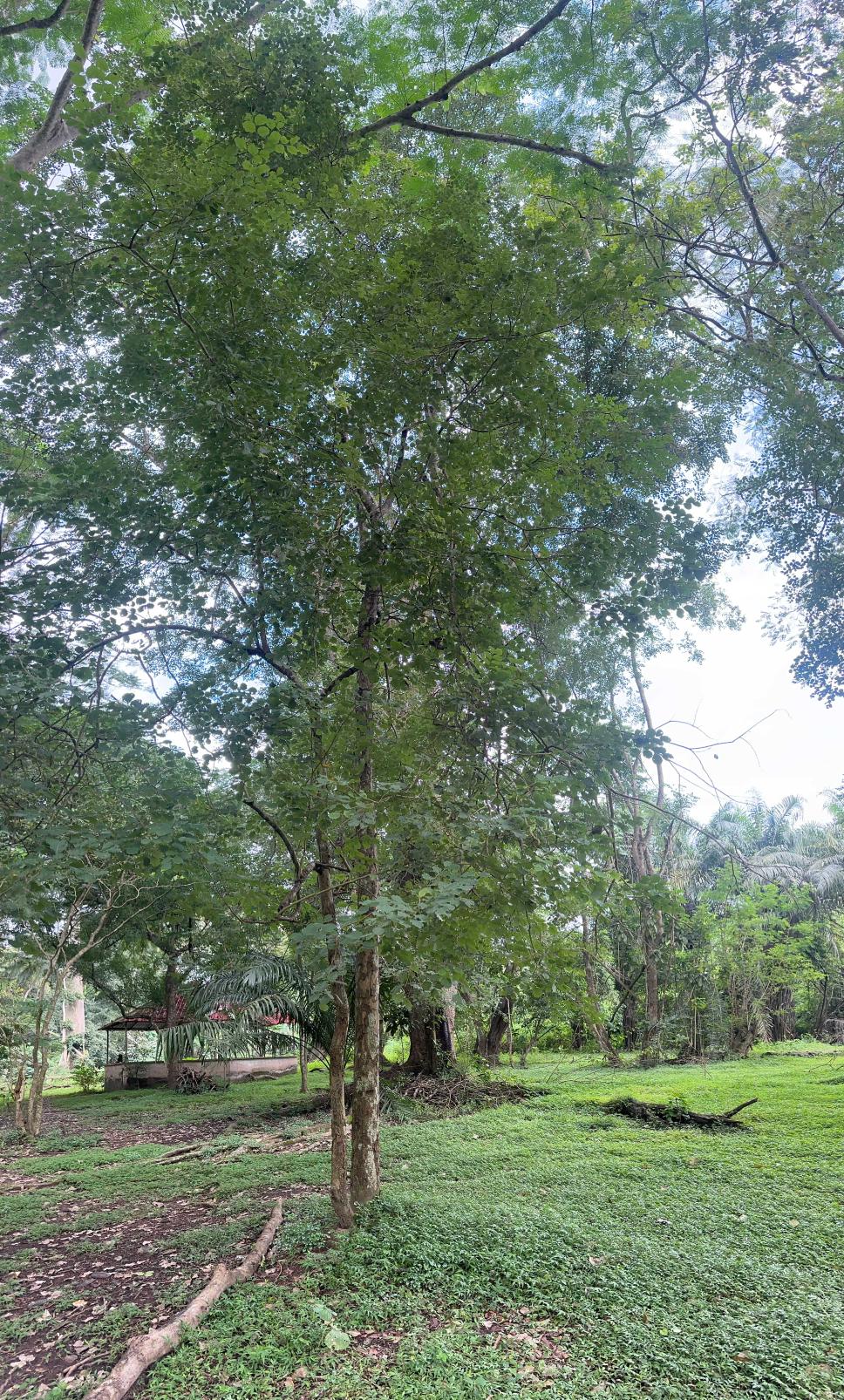
Medium to large deciduous tree, typically reaching 20–30 m in height with a straight, cylindrical bole. Bark grey to greyish-brown, thin, slightly scaly with shallow fissures. Leaves are alternate, pinnate with 5–7 ovate leaflets, dark green on the upper surface and lighter beneath. Flowers are small, whitish to pale yellow, fragrant, borne in axillary panicles. Fruits are flat, thin pods (4–7 cm long) containing 1–4 flat seeds.
Ecological Information
Prefers well-drained loamy or sandy soils. Requires full sunlight for optimal growth. Tolerates seasonal drought and grows in tropical monsoon climates. Fixes nitrogen through symbiosis with root nodules.
Uses & Importance
Timber: One of the most valuable hardwoods globally, prized for fine furniture, cabinetry, musical instruments, and veneers due to its beautiful dark streaked grain and durability. Ornamental: Occasionally planted in parks and botanical gardens for its straight trunk and shade. Ecological: Improves soil fertility through nitrogen fixation.
Tree Photos
Quick Info
- Scientific Name
- Dalbergia latifolia Roxb.
- Family
- Faboideae
- Tree Code
- UI-BG-TS-023
- Conservation
- Vulnerable