Lagerstroemia indica L.
Common Name
Crape Myrtle, Crepe flower
Family
Lythraceae
Origin & Distribution
Native to China, Korea, and Japan. Widely introduced as an ornamental in tropical and subtropical regions across Asia, Africa, the Americas, and Australia.
Conservation Status
Least Concern

Description
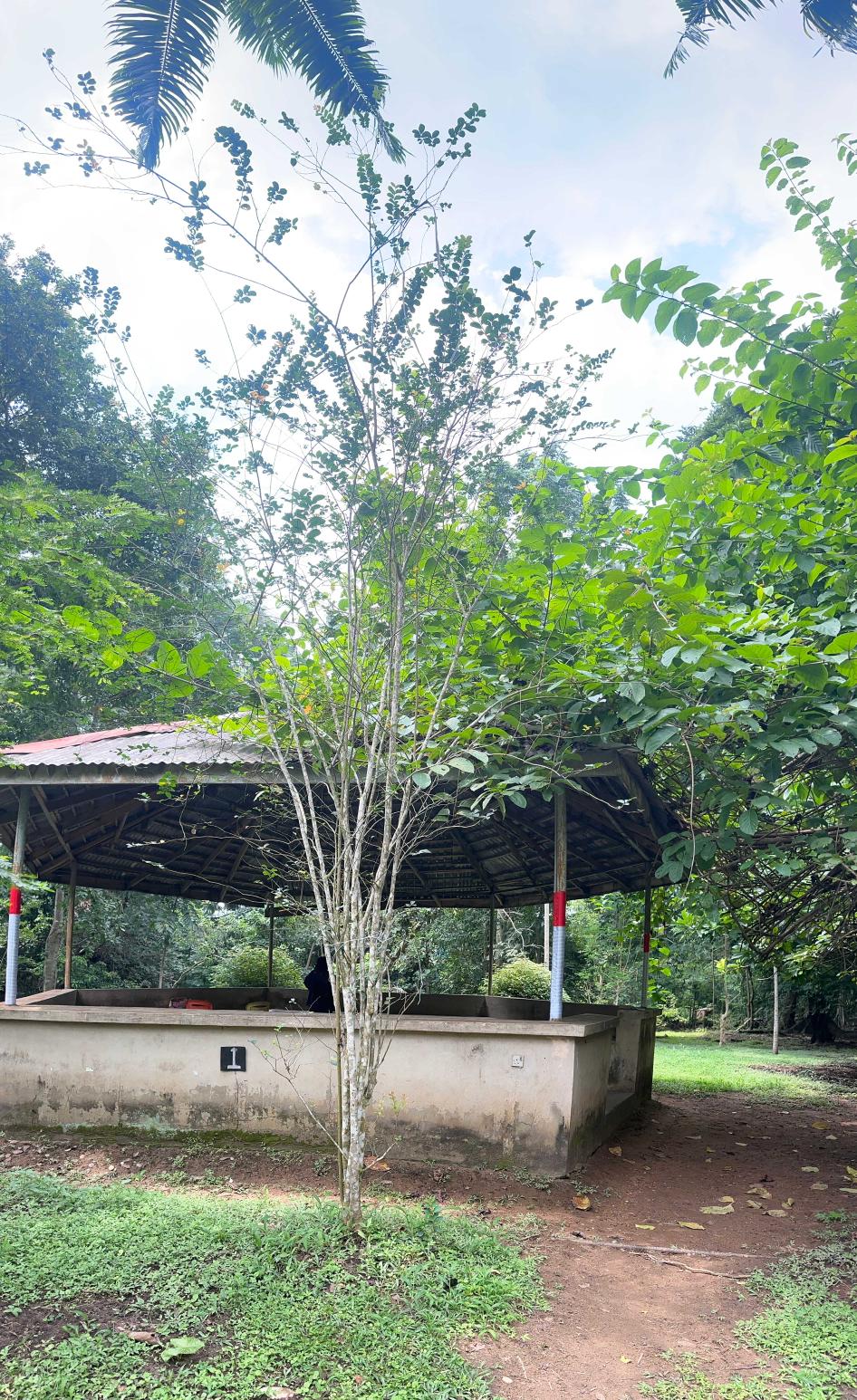
Small deciduous or semi-evergreen tree or large shrub, typically 3–6 m tall. Bark smooth, mottled, light brown to grey, peeling off in thin flakes to reveal a fresh underlayer. Leaves opposite or sub-opposite, simple, elliptic to oblong, 2–8 cm long; turn red, orange, or yellow in the dry season. Flowers crinkled, crepe-like, in panicles, colors vary from white, pink, lavender, to deep purple depending on cultivar. Fruits are small, brown, woody capsules that split open to release numerous winged seeds.
Ecological Information
Thrives in full sun and well-drained soils. Drought-tolerant once established but blooms best with consistent moisture. Attracts bees, butterflies, and other pollinators.
Uses & Importance
Ornamental: Highly valued for its long flowering season and ability to add color to landscapes. Environmental: Used in gardens, parks, and roadsides to provide shade, enhance aesthetics, and attract pollinators. Timber: Not commercially significant due to small size. Cultural: Symbol of love and longevity in some Asian traditions.
Tree Photos
Quick Info
- Scientific Name
- Lagerstroemia indica L.
- Family
- Lythraceae
- Tree Code
- UI-BG-TS-025
- Conservation
- Least Concern