Cocos nucifera L.
Common Name
Coconut Palm
Family
Arecaceae
Origin & Distribution
Believed to be of Indo-Pacific origin, Cocos nucifera is now pantropically distributed across coastal and lowland tropical regions worldwide. In Nigeria, it is cultivated along the coast and inland in ornamental landscapes.
Conservation Status
Least Concern

Description
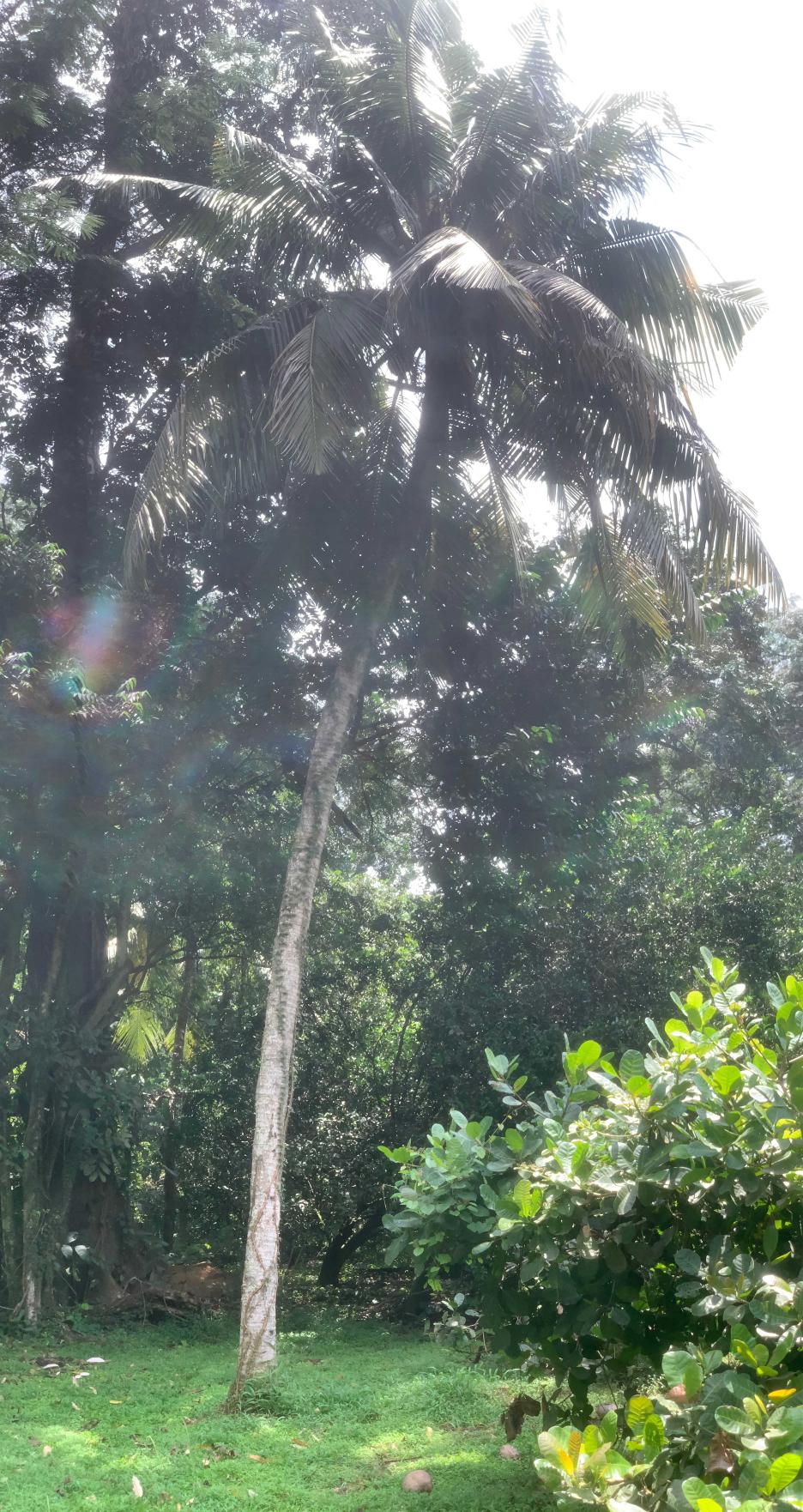
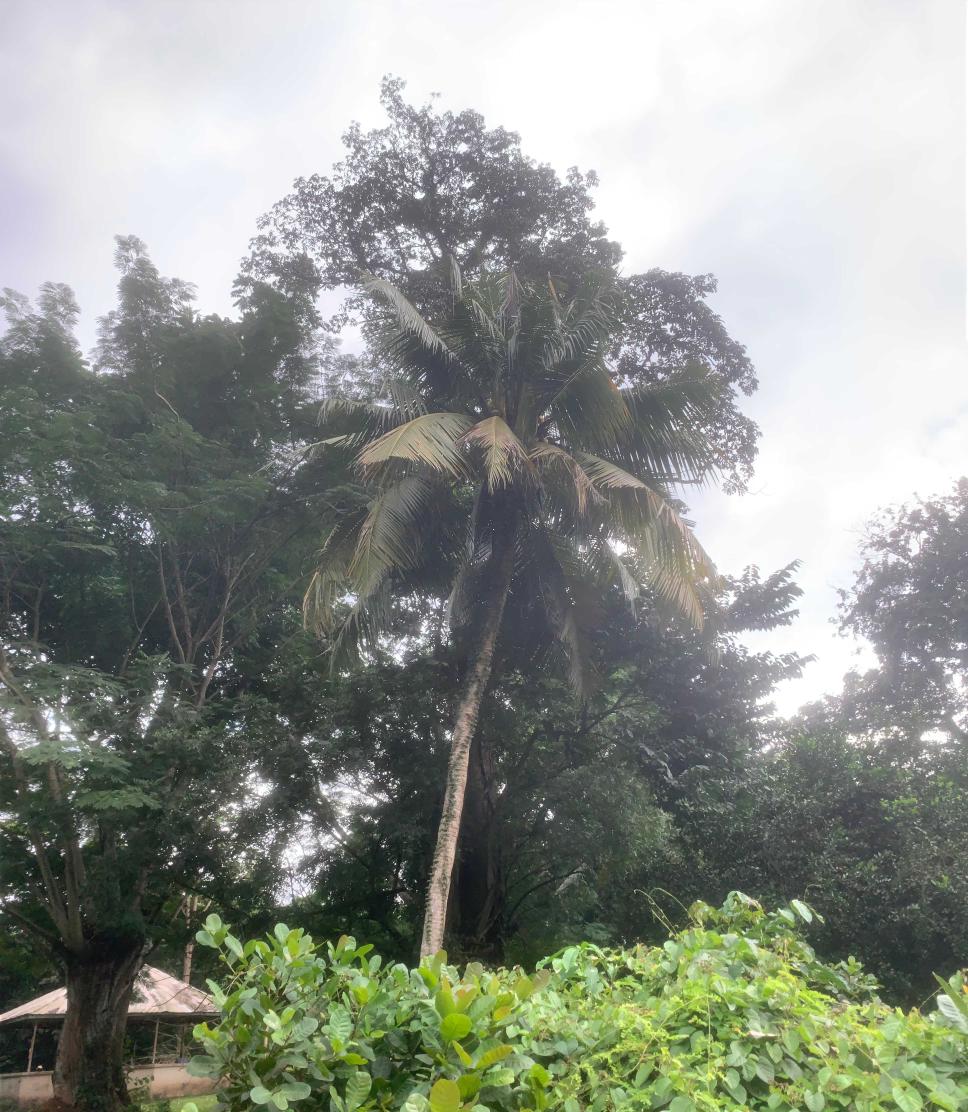
Tall, single-stemmed palm, typically 15–30 m in height, with a slender, slightly curved or leaning trunk. Crown composed of 20–30 large pinnate leaves, each 4–6 m long, with numerous narrow leaflets. Trunk grey-brown, ringed with scars from fallen leaves. Inflorescences emerge among leaves, consisting of creamy-yellow male and female flowers on the same plant (monoecious). Fruits are large, fibrous drupes (coconuts) with a hard shell enclosing edible white flesh (endosperm) and coconut water.
Ecological Information
Prefers sandy, well-drained soils and full sunlight. Highly tolerant to coastal conditions, including salinity and wind. Pollinated primarily by wind and insects. Fruit dispersed by water; coconuts can float long distances and germinate on distant shores.
Uses & Importance
Food: Coconut water, coconut milk, and kernel (copra) used for consumption. Oil: Copra yields coconut oil used in cooking, cosmetics, and soaps. Timber: Trunk used for construction and furniture. Fiber: Coir from husk used in ropes, mats, and brushes. Ornamental: Planted in landscapes for tropical aesthetic.
Tree Photos
Quick Info
- Scientific Name
- Cocos nucifera L.
- Family
- Arecaceae
- Tree Code
- UI-BG-TS-031
- Conservation
- Least Concern