Milicia excelsa (Welw.) C.C. Berg
Common Name
Iroko
Family
Moraceae
Origin & Distribution
Native to tropical Africa, ranging from Guinea-Bissau and Sierra Leone across West and Central Africa to Uganda, Tanzania, and Mozambique. In Nigeria, it occurs naturally in lowland rainforests and is also planted in parks, roadsides, and botanical gardens for timber and shade.
Conservation Status
Least Concern

Description
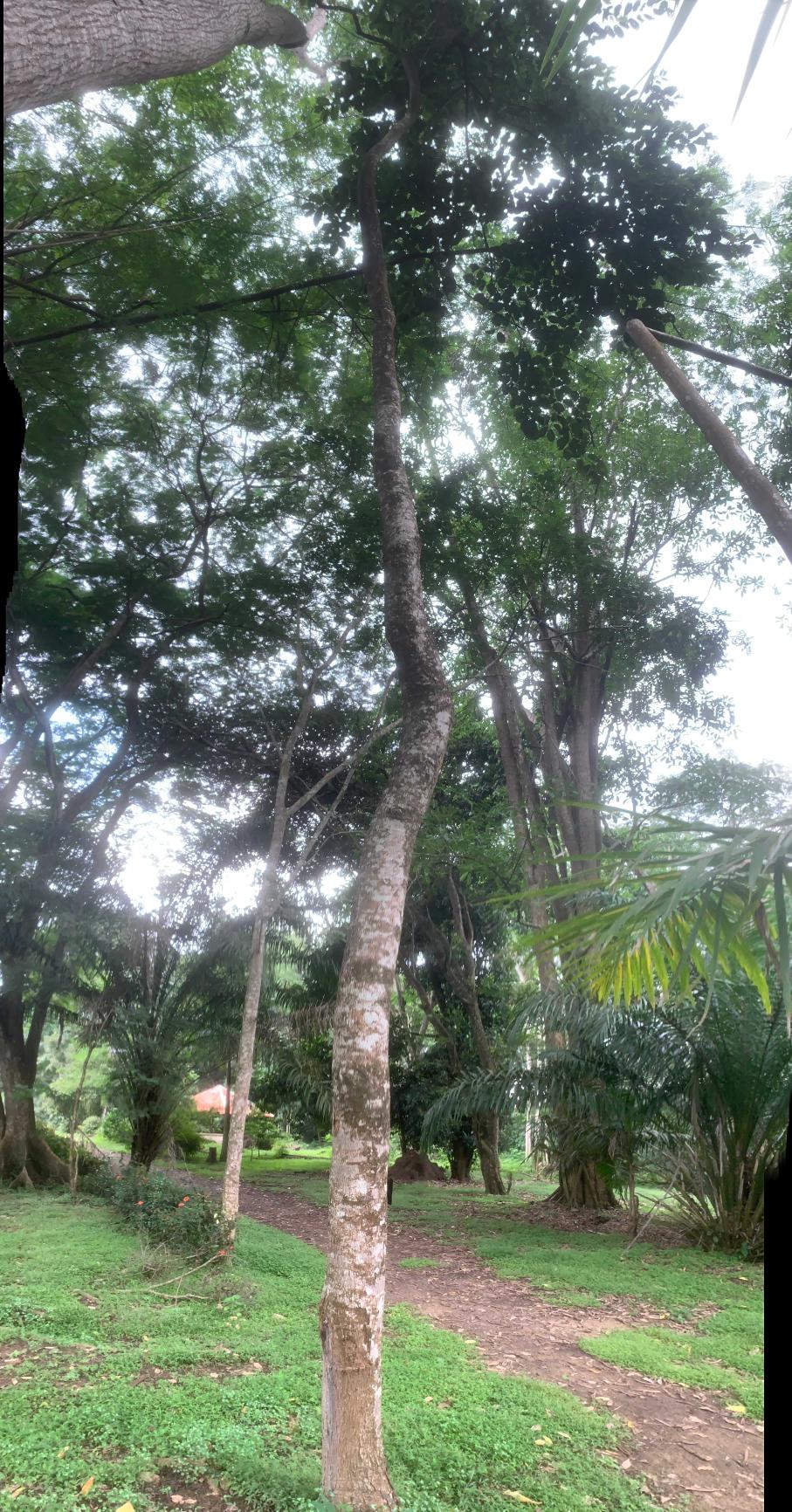
Large, deciduous hardwood tree, often reaching 30–50 m in height with a massive, straight bole that can be free of branches for up to 20 m and a trunk diameter exceeding 2 m. Bark: Grey to pale brown, scaly with fissures; exudes latex when cut. Leaves: Alternate, simple, broadly elliptic to obovate, leathery, dark green above and paler beneath; 6–18 cm long, with entire margins. Flowers: Small, unisexual, and greenish; species is dioecious (male and female flowers on separate trees). Male flowers are on long, drooping catkins; female flowers are on short, stout spikes. Fruits: A syncarp, oval to cylindrical, 2–6 cm long, containing many small seeds embedded in a fleshy pulp.
Ecological Information
Thrives in moist, well-drained soils of lowland rainforest and secondary forest zones. Tolerates a wide range of soil types but grows best in deep, fertile loams. Pollinated by wind; seeds dispersed mainly by bats, birds, and small mammals.
Uses & Importance
Timber: Renowned for its durable, termite-resistant wood used in furniture, flooring, shipbuilding, doors, and construction. Cultural Significance: Sacred in many West African traditions; often associated with spiritual beliefs and taboos. Shade and Ornamental: Planted in urban areas for shade due to its large canopy. Medicinal: Bark, leaves, and roots used traditionally to treat ailments such as fever, cough, and rheumatism. Environmental: Provides habitat for numerous birds, insects, and epiphytic plants.
Tree Photos
Quick Info
- Scientific Name
- Milicia excelsa (Welw.) C.C. Berg
- Family
- Moraceae
- Tree Code
- UI-BG-TS-037
- Conservation
- Least Concern