Treculia africana Decne.
Common Name
African breadfruit
Family
Moraceae
Origin & Distribution
Native to tropical West and Central Africa. Distributed from Sierra Leone to Sudan, Uganda, Angola, and Mozambique. In Nigeria, widely found in lowland rainforests and cultivated in home gardens and agroforestry systems for food.
Conservation Status
Least Concern

Description
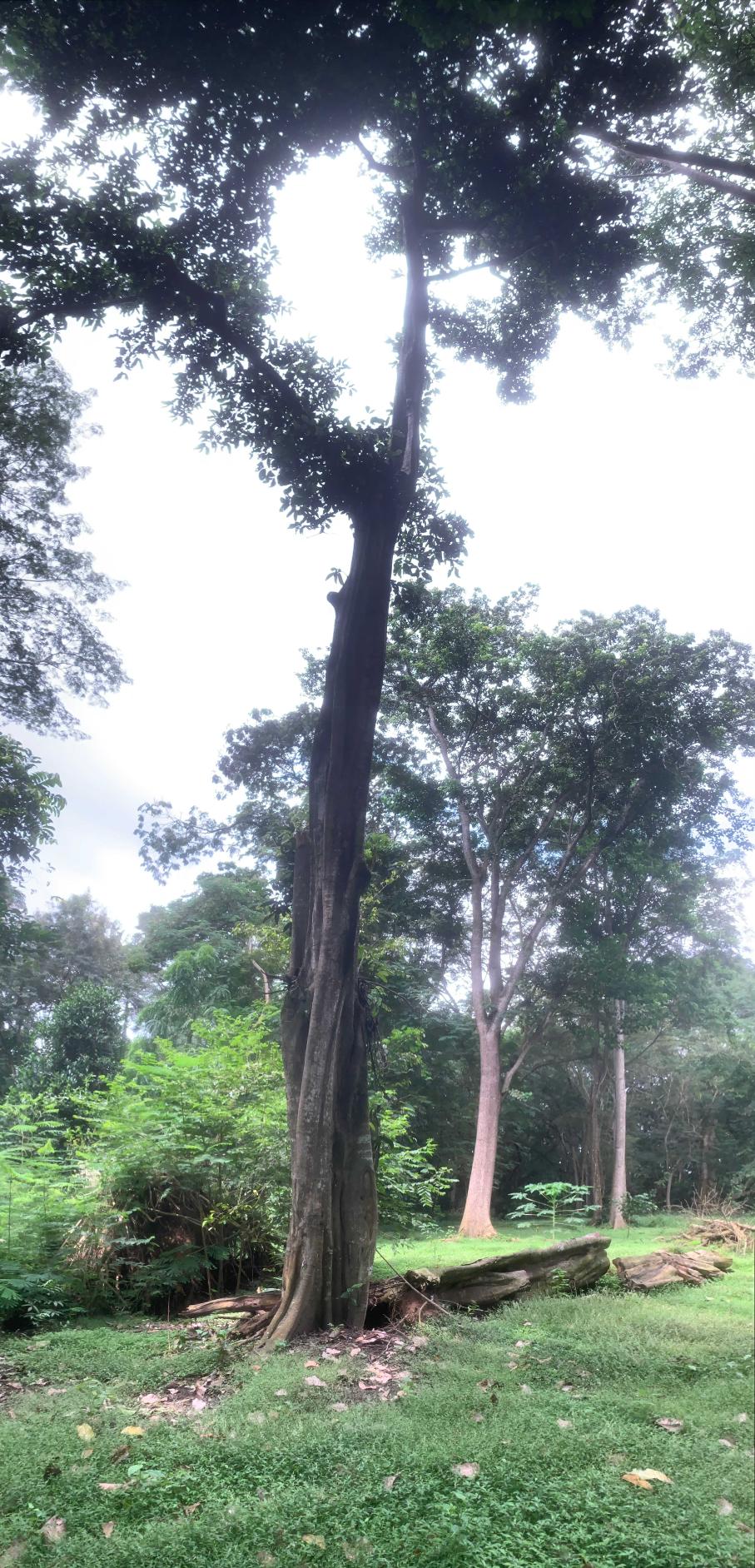
A medium to large evergreen tree, typically 15–30 m in height, with a short bole and wide-spreading branches forming a dense crown. Bark: Grey to light brown, slightly rough, exuding milky latex when cut. Leaves: Simple, alternate, broadly ovate to elliptic, 10–30 cm long, leathery, with prominent veins. Flowers: Tiny, unisexual; male flowers occur in globose heads, female flowers in large, rounded, compact heads; monoecious species (male and female flowers on the same tree). Fruit: Very large syncarp (can reach up to 30 cm in diameter, weighing up to 10 kg), with numerous embedded seeds in a fleshy pulp. Seeds are edible after roasting or boiling.
Ecological Information
Grows in moist lowland rainforests, riverine areas, and secondary forests. Prefers deep, fertile, well-drained soils and humid climates. Seed dispersal is mainly by animals and humans; bats and monkeys are known to eat the pulp.
Uses & Importance
Food: Seeds are a major source of carbohydrate and protein; eaten boiled, roasted, or ground into flour for porridge. Timber: Wood used for light construction, furniture, and utensils. Medicinal: Bark and leaves used traditionally for treating cough, wounds, and skin infections. Agroforestry: Provides shade and soil enrichment through leaf litter. Cultural Importance: In Igbo communities, ukwa is a prestigious food served during important occasions.
Tree Photos
Quick Info
- Scientific Name
- Treculia africana Decne.
- Family
- Moraceae
- Tree Code
- UI-BG-TS-038
- Conservation
- Least Concern